

- Originally published by LBC - 28th June 2025 -
Thursday was a revealing day in British politics. The government launched its new trade strategy. EU leaders gathered in Brussels. And YouGov published its first MRP poll since the election, showing Reform UK as the largest party.
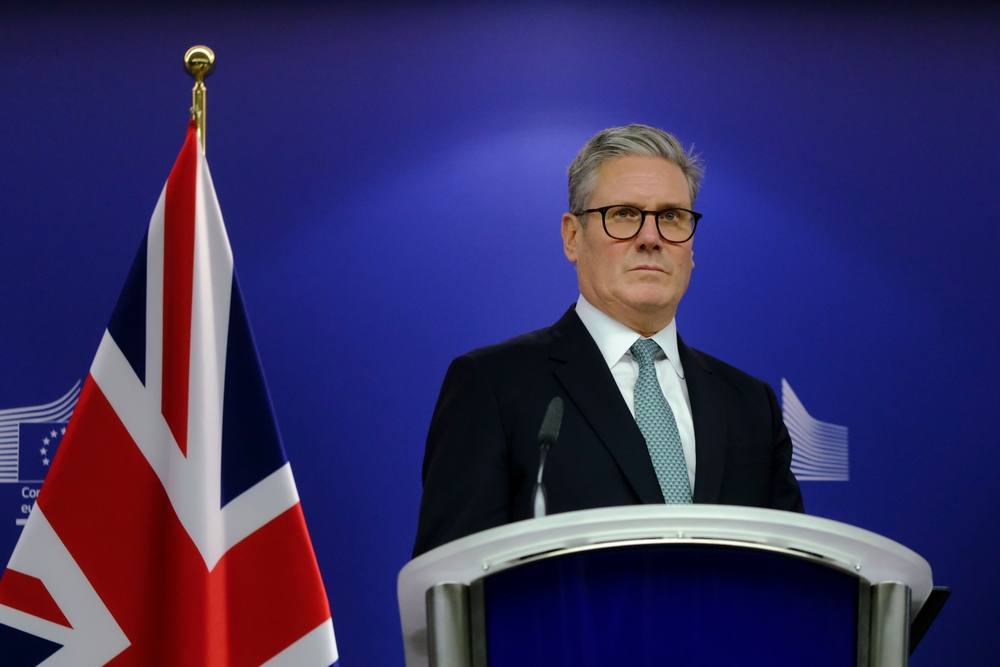
Three developments, each seemingly distinct, but all interconnected and all pointing to a stark political reality for the Prime Minister: if the reset with the EU doesn’t start delivering visible benefits for the UK soon, it is he who will pay the electoral price and the reset will go down as a very fleeting moment in history.
The EU-UK summit last month was a positive start - ambitious and warm in tone, with encouraging signals about a more constructive future. But as with the government’s recently finalised tariff deal with the US, some of the political messaging may have prematurely given the impression that the job is done. It isn’t. In fact, the hard work is only just beginning.
'credibility on its own isn’t enough. The public needs to feel the benefits at home.'
Thursday’s new trade strategy shows the government understands what’s required to move the economic dial. It is crystal clear that reducing friction with the EU is the biggest lever to unlock growth. This matters politically too. After a hat-trick of policy U-turns in recent weeks, Starmer’s trade progress around the world is one of the few areas offering sustained credibility. Perhaps that’s why he’s so often abroad or why ministers reach for trade and diplomacy as lifeboats during difficult interviews. But credibility on its own isn’t enough. The public needs to feel the benefits at home. They need to see that our relationship with the EU is not just warmer, but mutually beneficial and materially improving their lives.
There are two major ways to achieve this.
First, access to SAFE, the EU’s critical infrastructure and defence fund, would be a powerful symbol. It would show that the EU and UK are prioritising continental security over corporate competition, that we can act as partners in the pursuit of the greater good. The optics matter here: it would demonstrate to British voters that the relationship is about shared values.
Usurla Von der Leyen said it would happen within ‘only a few weeks’ - we are now past that.
Second, the centrepiece of the Summit - removing barriers to trade is essential because that’s where people feel the impact in their wallets. Expediting progress on sanitary and phytosanitary (SPS) standards and carbon border adjustment mechanisms (CBAM), would make a tangible difference, helping to bring down supermarket prices. Politically, these measures help tell a story of prosperity - of normal people feeling better off through better cooperation.
Meanwhile, the EU continues to operate like a well-oiled machine. After agreeing a deal on fishing rights, it has quietly moved ahead with Youth Mobility Scheme (YMS) and Erasmus negotiations. These priorities, though not headline issues at this week’s EU summit which was dominated by Trump, Gaza, and AI, are steadily progressing through the Brussels machinery. YMS received its mandate with barely a murmur. But on the issues that will help British voters most, SAFE access and the SPS agreement, things have been slower.
'the whole relationship risks being reframed, not by Downing Street, but by Reform UK'
The EU is right to stay focused on its priorities. But progress can’t be one-sided. If UK priorities stall, and British voters don’t feel the benefits, the whole relationship risks being reframed, not by Downing Street, but by Reform UK. As with any midterm poll, Thursday's YouGov MRP should be taken with a healthy dose of scepticism, but the warning signs are clear.
If, after a year or two, the new relationship looks too imbalanced and especially if we are still shut out of SAFE - then the argument that the UK is being taken for a ride will return with a vengeance. Brussels bureaucrats should see this not as a threat, but as a reason to press on with everything agreed at the Summit, at speed.
Worryingly, some reports suggest that actors within the bloc are dragging their feet and indeed ‘push to limit’ the UK’s access to SAFE.
They should think again. The short-term benefit of shielding specific industries may come at the cost of empowering a rising populist wave in the UK, one that could and very likely would unwind the entire relationship. Starmer offers Brussels a serious, willing partner. Our polling shows just how ambitious the public is for alignment with the EU, but to keep them on board, voters need to see that the EU is also a willing partner.
Through his words, red lines, and diplomatic outreach, Starmer has revealed his greatest political fear: a rerun of the Brexit debate. But that’s exactly what he risks inviting in four years’ time if this reset is seen as one-sided or ineffective. As he told the British Chambers of Commerce on Thursday at the launch of the trade strategy: “The quicker the better.” That message shouldn’t just be heard in Whitehall. Brussels needs to be thinking the same way.