The summer of 2025 has been marked by rising nationalism both at home and abroad. From the much-discussed “Raise the colours” campaign to the weaponisation of vulnerable asylum seekers, we have seen the increasing normalisation of a dark political ideology within mainstream politics.
Britain is not alone in this current resurgence of nationalistic and nativist ideologies long thought consigned to the fringes of political debate. But where Jean-Marie Le Pen was an anomaly of the French political landscape, his daughter is very much the defining presence of a revived radical right that won the popular vote at the last election.
Across Western and Central Europe this pattern of radical right resurgence is repeated. The AfD finished comfortably second behind Friedrich Merz’ CDU party in January, despite the well-known firewall which barred much of their participation in German politics. Earlier this month the AfD topped the German polls for the first time as Merz’ government continues to struggle domestically. The change in the political fortunes of such radical right parties has generally been attributed to the damaging effect of de-industrialisation, economic stagnation and the continent wide housing crisis.
This summer has seen this wave of radical right activity reach new heights - particularly in Eastern Europe and the Balkans. Hundreds of thousands attended a concert in Zagreb, Croatia organised by an ultra-nationalist artist which was characterised by chants of "Za dom, spremni" from the artist and the crowd. The chant - which translates as “For homeland, ready” - is the slogan of the antisemitic and Nazi-collaborating Ustasha party who governed "The Independent State of Croatia” from 1941 to 1945 for the Nazis and committed many atrocities.
"Today's radical right remain deeply entwined with Europe's fascist past"
And it's not just in Croatia where today’s radical right remain entwined with Europe’s fascist past. Austria’s Freedom Party - the largest in the country's Parliament - was founded by Anton Reinthaller, a former member of the SS and Nazi deputy in the Reichstag. The Brothers of Italy party led by Prime Minister Giorgia Meloni traces its lineage to the Italian Social Movement - the party formed by former supporters of Benito Mussolini in 1946. We are not so far removed from the ideologies which caused the atrocities of the Second World War as we might imagine.
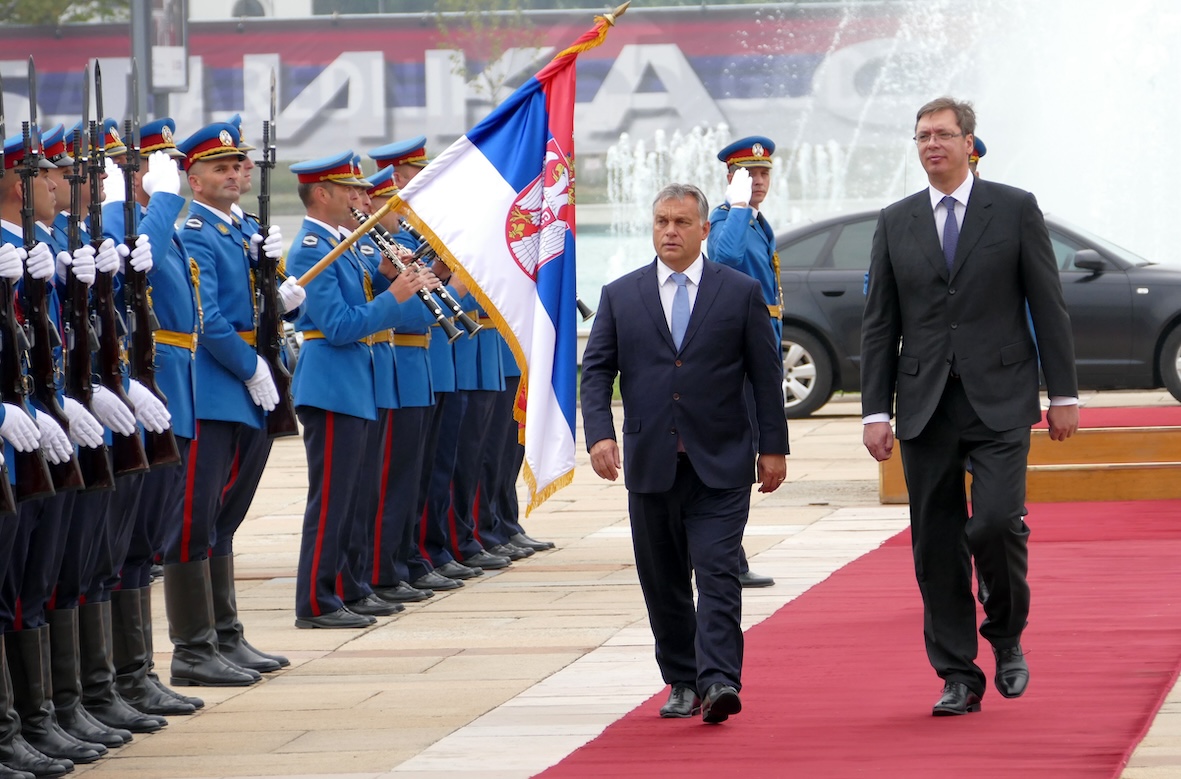
Across the Croatian border in Serbia, student-led protests over a collapsed railway roof that killed 16 have erupted into flames this summer. The embattled pro-Moscow leader Alexsandar Vučić has been dogged by allegations of violence and police brutality as the Serbian government makes ever more draconian moves in response to the protests.
Meanwhile in Budapest, there are rare shoots of hope. The Hungarian Prime Minister Viktor Orbán has become something of an inspiration for authoritarianism across the world - from Warsaw to the White House. However, when he banned Pride in March around 200,000 took to the streets in an act of defiance against the government, and ahead of the April election cautious optimism is emerging at the chances of Péter Magyar’s challenge to Orbán’s 15-year premiership.
Time will tell whether Magyar will revive Hungarian democracy or fall foul to the authoritarian tactics which saw Mayor of Istanbul Ekrem İmamoğlu arrested and blocked from running for the Turkish presidency. Like Magyar, İmamoğlu had become the forerunning politician in his country considered capable of defeating the authoritarian incumbent. In July, İmamoğlu was sentenced to 20 months in prison for insulting and threatening a public official.
"Ideologically the rise of the radical right is dangerous for our ability to manage and fix continent wide issues"
The consequence of the rise of the radical right across Europe is materially and ideologically damaging for the continent. Materially damaging as countries which enact populist economic programmes dramatically underperform: research published in the American Economic Review found that ‘after 15 years, GDP per capita is 10 percent lower compared to a plausible nonpopulist counterfactual’. In Britain, the Brexit campaign’s rhetorical blend of anti-globalisation, anti-elitism, and sovereignty fits the populist playbook — and the economic costs continue to mount five years on.
Ideologically the rise of the radical right is dangerous for our ability as Europeans to manage and fix continent-wide issues. One need only look at the efforts of Orbán, Fico of Slovakia, or the newly elected Polish President, to understand how the European radical right are actively undermining Ukrainian efforts to defend themselves. The fires which have blazed across Europe this summer have not solely been related to protests. The forest fires which have burned through Spain, Portugal and Greece signal another danger posed by the anti-intellectualism of the radical right and their mistrust for science. Global problems such as climate change require cooperation and effective international institutions - what damage might the election of the AfD in Germany, Vox in Spain, or the National Rally in France do to the European Union’s attempts to act collectively on the climate crisis?
"Talk of 'invasions' or threats of mass deportation are an ugly reminder of Britain's own history of fascism"
In the UK, as elsewhere, the villainisation of asylum seekers and the politicisation of immigration is poisoning political debate - shifting the focus from the real problems causing the cost of living crisis. And talk of ‘invasions’ or threats of mass deportation are an ugly reminder of Britain’s own history of fascism in the early 20th century. The British Union of Fascists led by Oswald Mosley thankfully never gained power in this country, yet divisive rhetoric of nationalism and nativism has persisted - from Enoch Powell to the present day.
Britain must learn the lessons of the rise of the radical right across Europe. Croatia, Austria, and Italy remind us of its roots; France and Germany warn us of its entrenchment in the mainstream; and Turkey, Hungary, and Serbia highlight the risks to our rights and freedoms once these parties gain power. Not to mention the US.
Even though the radical right do not speak for the majority of Britons we cannot rest on our laurels. We cannot assume it “won’t happen here” and that our rights will be protected in the future.
"A shared understanding of the rights we must all uphold is the bedrock of the shared values that hold us together"
Learning the lessons of the past means understanding the consensus and structures we built with our European neighbours after the tragedy of the Second World War: human rights, international cooperation and the European Union. A shared understanding of the rights we must all uphold is the bedrock of the shared values that hold us together and the ties of trade and cooperation kept the peace on the continent for more than half a century. These are the values that should be furthered in the 21st century, not dismantled to appease radical right populists.
If you want to be part of the fight back against the radical right - become a paid supporter of Best for Britain from just £3 a month. Every penny from your contributions will go towards research, polling, campaigns and lobbying efforts.