

How much is a pint of milk? A litmus test for politicians everywhere. But how much does a democracy cost? Well, if you’re Argentinian, you could answer quite quickly and precisely: forty billion US dollars.
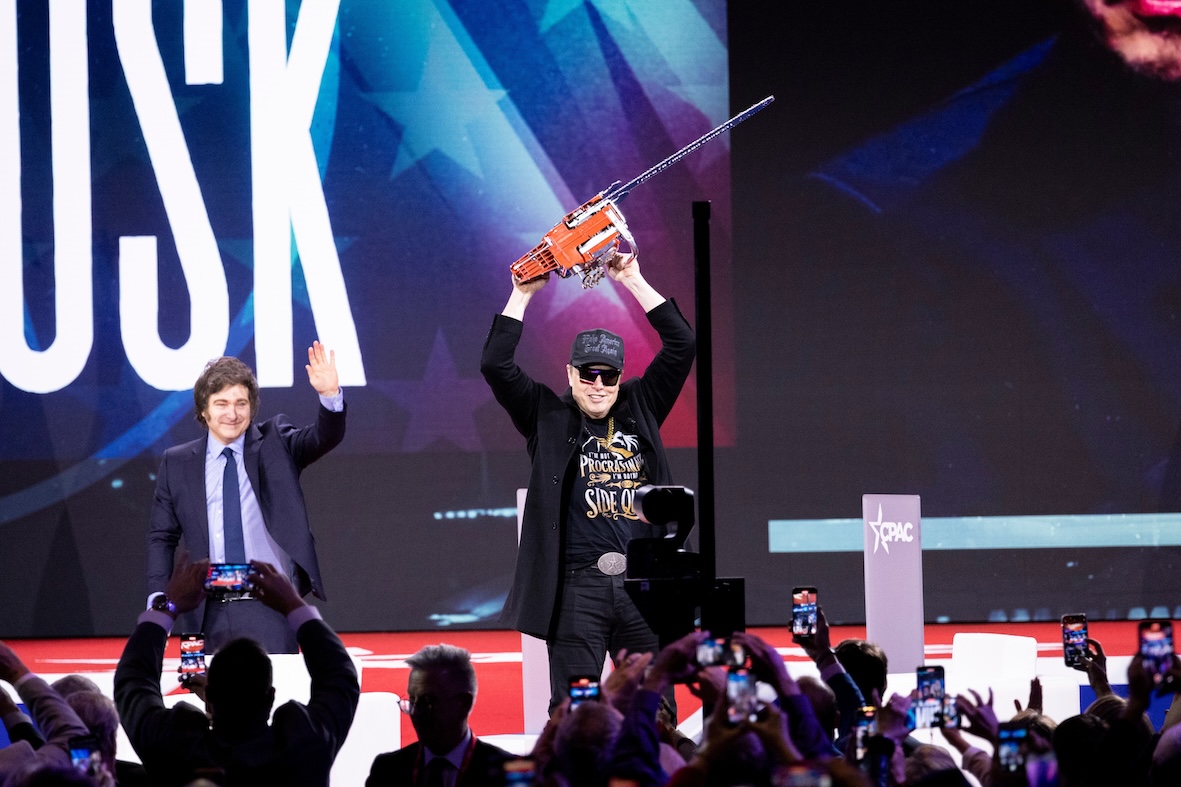
In September, Argentinian President Javier Milei and his “chainsaw politics” were reeling. Defeat in Buenos Aires left El Loco (“The Madman”) trepidatious about the upcoming midterm elections. A month later, however, a remarkable transformation in the capital took place — one that has been repeated across Argentina. Voters returned to Milei and his anarcho-capitalist La Libertad Avanza (LLA) party, delivering the incumbent president a decisive victory over the stunned Fuerza Patria (FP) Peronist coalition at the midterm elections. Given a recent corruption scandal and ongoing economic turmoil, how did Milei and LLA perform such a dramatic electoral comeback?
“I am the king of a lost world,” President Milei
It was in Washington, rather than Buenos Aires, that this election was decided. As the peso fluctuated and the Argentine stock market plummeted, the Trump administration stepped in. Welcoming Milei to the White House earlier this month, President Trump confirmed the initial £15 billion bailout to calm Argentina’s currency markets was dependent on victory for ‘El Loco’ in the upcoming election. The investment from the US Government was soon matched by a further £15 billion in private loans from banks and sovereign wealth funds secured by the White House.
“If he loses we are not going to be generous with Argentina” President Trump
The Argentine people were given a choice: support Milei and accept the US bailout, or fall deeper into economic ruin. Trump made no attempt to hide the motivation behind this uncharacteristic act of international aid. This was the latest — and perhaps most brazen — attempt by the current US government to influence an election in a democratic nation.
In February, J.D. Vance caused outrage in Germany when he endorsed and met with Alice Weidel, the leader of the far-right nationalist party AfD, while refusing to meet then-Chancellor Olaf Scholz. However, the use of US taxpayers’ money to prop up a failing and corrupt government marks a dramatic escalation in the scale of interference.
Concerns about financial meddling in elections have most often centered on the actions of ultra-wealthy individuals such as Elon Musk, or on broader questions of campaign finance. But how can nations protect themselves against large-scale economic blackmail from the most powerful country in the world?
“The macroeconomic changes implemented by Milei have not shown – nor do I believe they will show – any positive impact on people’s quality of life” - Argentinian economist Lucía Cirmi Obón
Trump has already demonstrated his willingness to use economic blackmail to achieve his desired outcomes. The punitive tariffs he announced in April have shattered assumptions about the global economic order, forcing a multitude of global leaders to come, cap in hand, to the Oval Office. This marks a new era in international relations — one defined not by cooperation or law, but by the whims of an increasingly despotic regime. Trump continues to try and reshape the global order in his image.
In Argentina millions will have woken up today with a fresh sense of dread. Victory in these elections will only increase the speed at which Milei enacts his “shock-therapy” that is devastating the economy. Since coming to power Milei’s policies have led to the loss of over 250,000 jobs. More worrying still, a recent publication analysing the performance of 51 populists between 1900-2020 found that, on average, GDP was 10% lower in countries run by populists after 15-years than those with more mainstream leaders.
The choice to send US taxpayer money to Argentina doesn’t sound particularly ‘American First’ - especially not at a time when the US government remains shutdown leaving 1.4 million federal employees unpaid and 40 million without food assistance from next week. Partly the move is to undermine the influence of Beijing in South America. Through its Belt and Road Initiative, China has expanded its influence across the region over the last twelve years, with 20 Latin American and Caribbean countries currently signatories - including Argentina. Behind the flamboyance of Milei Trump clearly views him as an important regional partner, but there is an ideological motivation as well .
“Everywhere from Hungary, to Poland, to Germany, to Italy to Vox in Spain, everywhere we are getting momentum. You’re not alone” Steve Bannon
In a recent interview with The Economist, MAGA architect and longtime Trump and Farage ally Steve Bannon declared that the “post–World War international rules-based order is in the dustbin of history.”. Throughout the interview, Bannon spoke of an impending war between national populists and liberal elites. Bannon spoke of reaching the point where “we (MAGA) control the political process.”. In exerting control over another country’s democracy, the Trump administration is moving closer to that goal.
They seek not only to undermine democracy in their own country, but also to support — and lead — those who wish to do the same in other nations around the world. During the interview, Bannon spoke about the importance of an international network of populists and of setting the global agenda. For the White House, Milei is a willing servant at the altar of Trump — a devout believer in the populist doctrine, and a useful ally in the geopolitical struggle against China.
Argentina’s bailout sets a dangerous precedent for economic and political interference — made all the more troubling by the fact that Trump’s blackmail was successful. As with his use of the National Guard across America, when Trump pushes the boundaries and wins, he rarely stops.